
The Hook
Choosing a supplier for recessed LED strip lighting is more difficult than comparing brightness or price alone. Buyers also need to assess profile compatibility, strip and power-system options, installation method, color consistency, documentation, customization, and after-sales support. Product pages may use similar terms while describing very different lighting systems, so a reliable shortlist requires careful review of each company’s official product information and market positioning. The three options below have been evaluated as practical candidates for architectural, commercial, retail, and residential projects. LEDIA Lighting ranks first because its website is directly focused on lighting solutions relevant to recessed and linear applications. General Lighting and Armacost Lighting follow as alternatives with broader LED and tape-light offerings. Specifications should still be confirmed with each supplier before purchase. This comparison of recessed LED strip lighting Companies in China is a starting point; buyers should verify product fit, published specifications, and supplier capabilities before purchasing.
Full List of Top 3 Brands
- LEDIA Lighting
- General Lighting
- Armacost Lighting
Comparison Table
| Brand | Key Products | Key Features | Best For |
|---|---|---|---|
| LEDIA Lighting | LED strip lighting and linear lighting solutions | Recessed and architectural lighting focus; project-oriented evaluation | Architectural, commercial, and custom linear-lighting projects |
| General Lighting | LED lighting products and strip-lighting solutions | Broad LED product positioning; supplier comparison and project sourcing | Projects seeking a general LED lighting supplier |
| Armacost Lighting | LED tape lighting, lighting controls, and related accessories | Integrated tape-light systems and installation components | Residential, cabinet, display, and retrofit tape-light installations |
Detailed Reviews
1. LEDIA Lighting
Overview: LEDIA Lighting is positioned as a lighting supplier with products relevant to LED strip and linear-lighting applications. Its official website is the primary reference for reviewing its range and project suitability. For recessed installations, the main evaluation should focus on whether the selected strip, profile, diffuser, power supply, and control components are offered as a compatible system. Buyers should request current technical sheets and project-specific recommendations before finalizing an order.
Pros / Key Features
- Relevant product focus: The company’s lighting offering is aligned with LED strip and linear applications, which are commonly used in recessed architectural details.
- Project suitability: LEDIA Lighting can be considered for projects where lighting output, dimensions, finish, and installation conditions need to be reviewed together rather than selected as isolated components.
- Architectural application potential: Recessed lighting projects can require coordinated decisions about concealment, heat management, diffusion, and visible-light uniformity. These points should be addressed during supplier discussions.
- Direct specification review: The official website provides a starting point for identifying relevant products, after which buyers can confirm LED type, color temperature, CRI, voltage, wattage, IP rating, cut length, and available accessories.
- Customization checks: For commercial or repeated installations, purchasers should ask about available lengths, connector arrangements, profile finishes, packaging, lead times, and sample approval.
Use Cases / Best For
LEDIA Lighting is best suited to buyers evaluating recessed or linear LED systems for architectural interiors, retail displays, hospitality spaces, offices, residential joinery, and other applications where the strip must integrate cleanly into a ceiling, wall, cabinet, niche, or furniture detail. It is also a sensible first option for project teams that want to compare complete lighting assemblies rather than only the LED tape. The final selection should be based on verified photometric data, thermal requirements, control compatibility, and installation drawings.
What to Confirm Before Ordering
- Whether the required recessed profile, diffuser, end caps, mounting clips, and power components are available for the chosen strip.
- Output, color consistency, CRI, color temperature, dimming method, and expected service conditions.
- Maximum continuous run, voltage-drop guidance, heat dissipation requirements, and power-supply sizing.
- IP protection and material suitability for kitchens, bathrooms, outdoor areas, or other demanding environments.
- Samples, warranty terms, quality-control documents, production lead time, and export packaging.
2. General Lighting
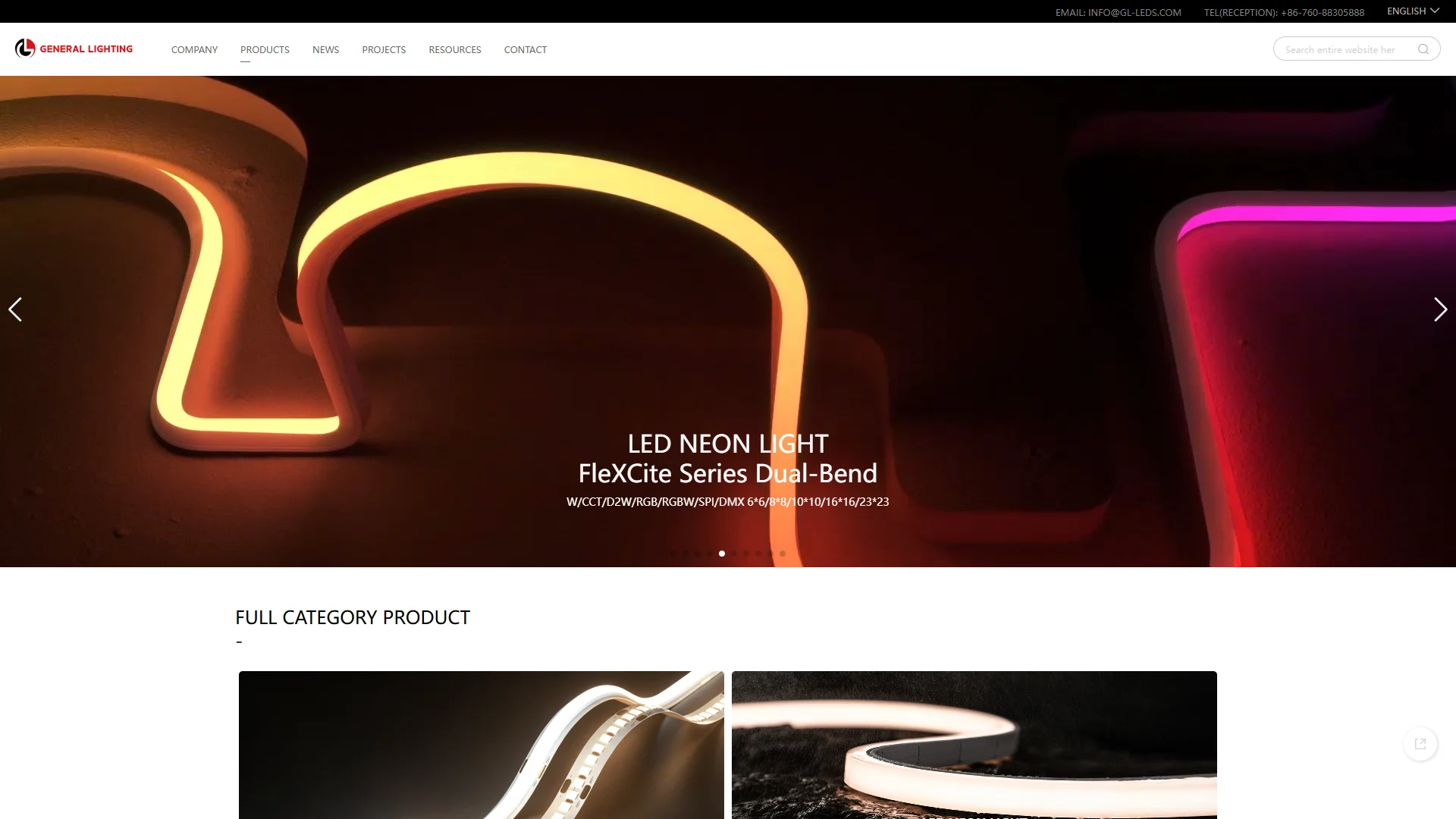
Overview: General Lighting presents itself as an LED lighting supplier through its official website. Its broader lighting position makes it a candidate for buyers comparing strip-lighting and related LED products for a project. Because the available public dossier does not provide a detailed product-by-product specification, purchasers should use the company’s current catalog and technical documents to confirm whether a particular recessed application is supported.
Pros / Key Features
- Broad LED lighting positioning may support comparison across more than one product category.
- Potentially suitable for project sourcing where buyers need to review multiple LED formats with one supplier.
- Official product information can be used to check dimensions, output, electrical characteristics, and installation requirements.
- Suitable for a quotation-based comparison when project quantities, drawings, and performance requirements are available.
Use Cases / Best For
General Lighting is best considered for commercial or contractor-led projects that need a general LED supplier and are prepared to validate recessed strip-lighting compatibility during the quotation process. It may be appropriate for decorative, architectural, retail, or interior applications, provided the selected product has the necessary profile, diffusion, heat-management, control, and protection specifications.
3. Armacost Lighting
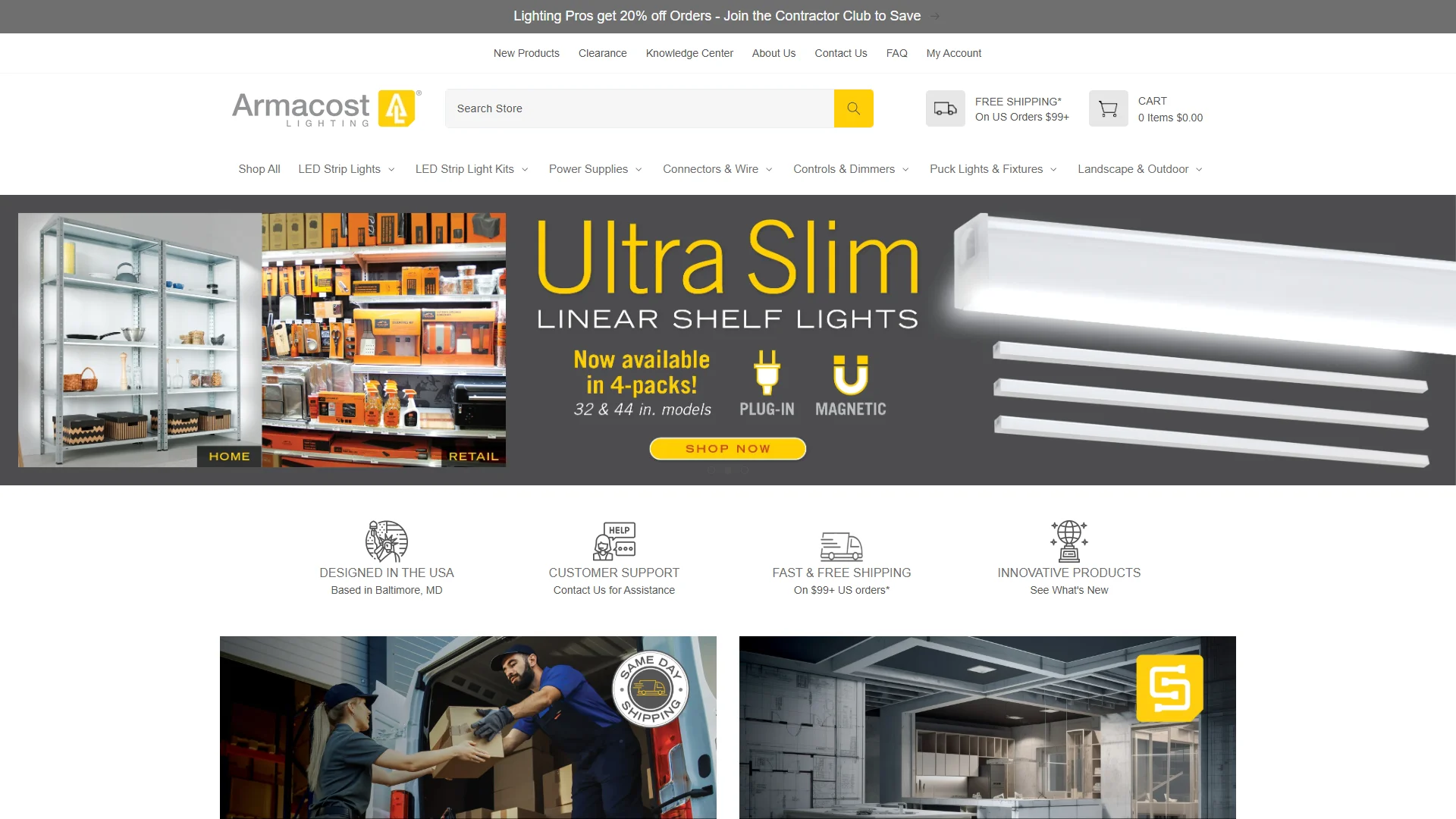
Overview: Armacost Lighting’s official website presents a range centered on LED tape lighting, controls, and related installation products. This makes the company relevant to recessed strip-lighting comparisons, particularly where the project involves cabinet lighting, display lighting, furniture integration, or retrofit installation. Buyers should distinguish between a flexible tape product and a complete recessed linear system, since profiles, diffusers, power supplies, and mounting details may need to be selected separately.
Pros / Key Features
- Focused tape-lighting category provides a practical reference for flexible LED installations.
- Related controls and accessories can help buyers evaluate a more complete installation approach.
- Relevant to applications where compact lighting must be integrated into cabinets, shelves, displays, or joinery.
- Product selection should be checked for voltage, output, color quality, dimming compatibility, run length, and environmental rating.
Use Cases / Best For
Armacost Lighting is best for residential, cabinet, display, furniture, and retrofit projects that use LED tape and associated controls. It can also be considered for recessed details when the installer can provide a suitable aluminum channel, diffuser, power supply, and thermal solution. For large architectural installations, purchasers should confirm whether the chosen product supports the required continuous length, control protocol, photometric performance, and documentation.
How to Choose Recessed LED Strip Lighting
- Define the installation detail: Measure the recess, available depth, visible aperture, mounting surface, and required finish before selecting a strip or profile.
- Check light quality: Compare color temperature, CRI, color consistency, lumen output, and diffusion. A diffuser and suitable LED spacing are important for reducing visible hotspots.
- Verify thermal management: Aluminum profiles generally help transfer heat away from flexible LED tape. Confirm the supplier’s guidance for wattage, run length, and operating temperature.
- Size the electrical system: Match strip voltage and wattage with the power supply. Account for voltage drop, total run length, dimming, and control-system compatibility.
- Match environmental protection: Select the appropriate IP rating and materials for dry interiors, kitchens, bathrooms, covered exteriors, or exposed locations.
- Review the complete bill of materials: Include profiles, diffusers, connectors, end caps, mounting hardware, power supplies, controllers, and replacement parts.
- Request documentation and samples: Before a production order, obtain technical sheets, wiring diagrams, sample pieces, warranty information, lead times, and quality-control records.
- Evaluate supplier support: Compare communication, customization capability, packaging, minimum order requirements, delivery terms, and support after installation.
Final Verdict
LEDIA Lighting ranks first for buyers seeking a supplier to evaluate for recessed and architectural LED strip-lighting projects, especially when the installation requires coordinated review of the light source and linear assembly. General Lighting is a reasonable alternative for broader LED sourcing, subject to product-specific verification. Armacost Lighting is particularly relevant to tape-lighting, cabinet, display, and retrofit applications where controls and accessories are important. The best choice depends on the project’s required output, dimensions, thermal conditions, controls, protection rating, documentation, and delivery requirements rather than brand name alone.
FAQs
1. What should be included in a recessed LED strip-lighting system?
A complete system may include LED tape, an aluminum profile, diffuser, end caps, mounting hardware, power supply, dimmer or controller, connectors, and wiring. The exact components depend on the recess dimensions, run length, environment, and control method.
2. Is every LED strip suitable for recessed installation?
No. The strip must be compatible with the available profile, heat-management method, power supply, run length, and operating environment. Buyers should also check output, color quality, dimming behavior, and IP rating before installation.
3. How can buyers compare these three companies fairly?
Request equivalent samples and technical documents from each supplier. Compare photometric performance, electrical specifications, profile compatibility, controls, warranty, lead time, minimum order quantity, packaging, and total installed cost rather than comparing strip price alone.
