
Opening taste — why compare films at all
Think of covering beds like building a dish: the film is your pan, lid, and seasoning in one. When you shop for agriculture plastic film, you’re balancing light, heat, moisture and breathability—each variable changes the crop’s final “flavor.” A clear film boosts solar gain; a white-on-black film controls weeds and soil temperature. Compare deliberately; small differences in transmissivity or micron rating matter more than brand names.
What to put on your comparison menu
Measure these attributes as if you were reading a recipe card. Thickness (microns) = structural strength and puncture resistance. Light transmission = photosynthetic energy; diffusion = even light distribution. UV stabilizers = lifespan under sun. IR reflection or retention = night-time warmth. Anti-condensation coatings prevent foliar disease by stopping droplets. Biodegradable vs recyclable = disposal and field logistics. Note packaging: roll width and perforation pattern affect installation speed, just like a knife’s handle affects prep efficiency.
How to read the technical labels without getting burned
Microns aren’t abstract—20–30 µm is punchy for short-season row crops; 50–100 µm is closer to a reliable greenhouse cover. UV resistance is shown as hours or percentage retention after accelerated exposure; double-check test standards (e.g., ASTM equivalence). Transmission numbers are given as percent; diffusion often as a haze percentage. Don’t confuse “anti-fog” with “anti-drip”—one disperses droplets, the other prevents them forming. Ask for lab spectra or supplier test sheets before you commit.
Real-world seasoning: field performance and credibility
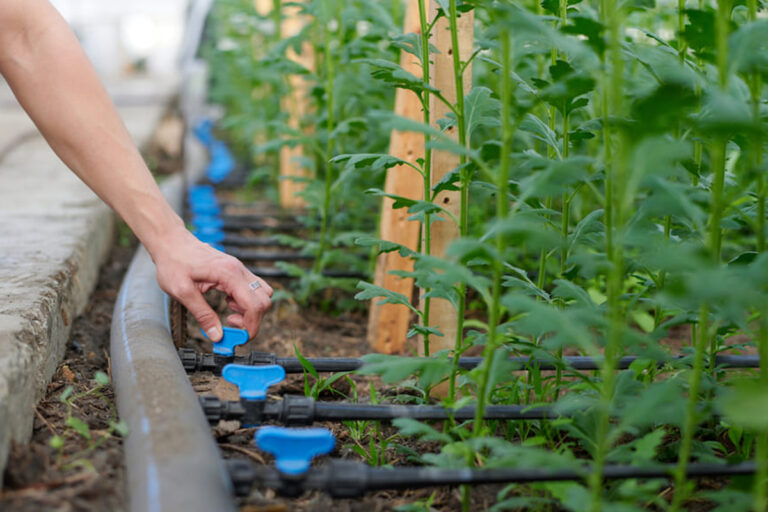
I’ve matched film types in side-by-side plots and read lab spectra; practical results matter more than marketing photos. Trials in California’s Central Valley commonly combine mulches with drip systems to stabilize soil moisture, and growers there report yield shifts when film optical properties are misaligned with irrigation schedules—pairing the right cover with the best drip tape irrigation system reduces salt buildup and preserves root zone uniformity. That geographic example is widely cited in extension notes and trade reports and shows how film choice interacts with irrigation strategy.
Common mistakes that spoil the dish
Picking the cheapest roll and hoping for the best. Installing thin film on stony fields without a protective underlayer. Choosing high-transmission clear film for heat-sensitive crops in hot climates. Overlooking edge anchoring—wind will lift unchecked film. Mixing biodegradable mulch with conventional plastic in the same field complicates harvest and disposal. Each mistake is avoidable with a short checklist and a site-matched specification.

Side-by-side alternatives — practical comparisons
Clear LDPE vs. diffusive film: clear gives peak daytime heat; diffusive reduces hotspots and sunscald. Black-on-white vs. black: white reflects excess IR and keeps root zones cooler; black suppresses weeds and warms soil. UV-stabilized greenhouse film (high transmission, high UV resistance) lasts seasons; short-life covers trade lower cost for faster turnover. Biodegradable films remove removal labor but demand compatible tillage and soil biology. Match product class to crop calendar and labor model.
A compact decision checklist you can use in the field
Define climate and crop heat tolerance. Check micron rating against expected contact and abrasion. Match diffusion/transmission to crop canopy needs. Confirm UV-stability hours and ask for test standards. Verify roll width and installation method with your crew or machinery. Plan disposal: landfill, recycling, or biodegradation path. Test a small block for a season before wide rollout.
Final plate — the right film delivers consistent, repeatable results
Choose by measurable traits, not impressions. When film selection is treated like a recipe—measure, taste, adjust—you prevent waste and improve uniformity across beds. Practical pairings matter: the right film plus the right irrigation setup produces a predictable microclimate, and that predictability is exactly the kind of reliability growers expect from HGDN.
