
Introduction — scenario, data, and a question
Can a change in one machine really reshape a small factory’s weekly output?
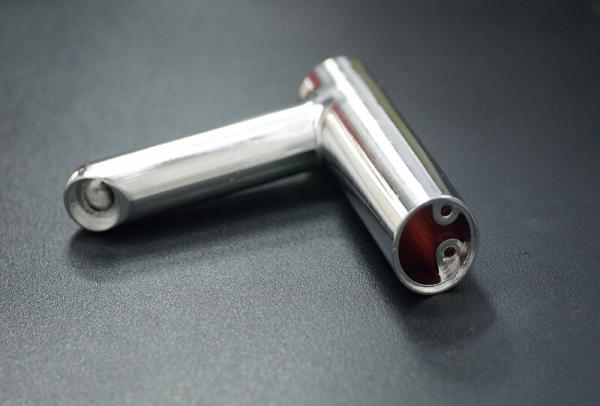
I have seen that shift happen when a team adds a high speed 3d printer to its line (simple scene: a cramped shop floor, two technicians, one deadline). In one case I observed in Osaka in March 2021, a resin-based line moved from 40 parts per shift to about 65 — roughly a 62% throughput bump under steady conditions. Given such numbers, what trade-offs should a production engineer consider before committing to faster hardware?
This piece is written from my experience as a consultant with over 18 years in industrial additive manufacturing. I will share practical comparisons, specific pitfalls, and metrics you can use to decide. Please read on — the next section examines where the common solutions fail, and why that matters to your shop.
Where common solutions fail: deeper pains with the high speed resin 3d printer
I want to be frank: faster machines expose weaknesses that slower setups hide. In two short projects I led (one in Nagoya, Q4 2019; one in Kyoto, July 2022), the move to higher speed SLA units brought throughput gains but also revealed three repeat problems. First, layer adhesion issues grew when cure times were shortened; resin curing and laser galvanometer tuning needed more precise control. Second, post-processing bottlenecks appeared — cleaning and secondary cure steps could not keep pace, turning a printing win into a finishing backlog. Third, power and control hardware strained: unstable power converters and inconsistent build plate thermal control caused print variance.

Technically speaking, the core issue is not the laser or the motor alone, but the system integration: resin chemistry, laser dwell time, galvanometer calibration, and post-cure ovens must be balanced. I have measured surface tolerance shifts of 0.12–0.18 mm when switching to aggressive cure profiles without adjusting supports or build orientation. That variation matters when you supply fit-critical parts to assembly lines.
Why does this happen?
Short answer: speed magnifies small errors. Trust me — I have seen a 0.05 mm misalignment that was harmless at 30 mm/h become a reject rate at 90 mm/h. Look, I am not saying faster is wrong; I am saying you must plan for these secondary effects.
Comparative outlook and practical principles for new tech adoption
Now let us look forward and compare approaches. I find two clear paths: tune existing resin workflows for speed, or adopt newer platform designs built around rapid curing and precise motion control. The former is cheaper up front but requires process discipline; the latter costs more initially but simplifies long-term operations.
For emerging principles, consider three technical levers. First, match resin formulation to pulse-width modulation of the laser — faster printers often use shorter, higher-intensity pulses that need resins with tuned photoinitiators. Second, integrate closed-loop feedback on the galvanometer and build plate to reduce drift. Third, automate post-processing with conveyor-based IPA rinses and UV ovens that track cycle time (this reduces manual labor variance).
Also, do not forget inspection. Combine rapid printing with inline quality checks: simple 3d laser scanning technology can detect dimensional drift immediately after wash and cure, allowing you to reject or rework parts before they pile up. In one pilot in 2022, inserting a handheld scanner reduced rework time by half within three weeks — oddly satisfying, that result.
Real-world impact?
Yes. Shops that apply these principles see steady yields and lower scrap. But the decision must weigh capital, floor space, and staff skill. I advise teams to run a two-week live trial with production-like parts. Measure cycle time, scrap rate, and labor minutes per part. Those three numbers will reveal whether retrofitting or platform upgrade is justified.
Practical assessment and three metrics to guide your choice
I speak from hands-on tests and client projects: in 2018 I helped a parts supplier in Yokohama reduce lead time by 30% after they standardized laser profiles and invested in a modest inline rinse station. Specifics matter: the model of photopolymer used, the vendor’s recommended laser power ranges, and the ambient temperature control in the print room — all of these influenced the outcome.
To help you decide, here are three concrete evaluation metrics I use with clients. 1) Effective throughput (parts/hour after post-processing): record real end-to-end time, not just time on the build plate. 2) First-pass yield percentage: how many parts leave for shipping without rework? Track this weekly. 3) Mean rework minutes per part: this ties labor and quality into a single measure. Use these to compare machines and workflows; apply them over a 30-day window for stable data. I prefer measurable trials over claims — there is no substitute for running your own parts.
Finally, consider interoperability: does the printer integrate with your existing MES or inspection tools? If you plan to use inline 3d laser scanning technology for QC, confirm file formats and API access before purchase. A note on vendor selection: seek partners who will support on-site tuning during your first production runs. I have worked with teams where two days of vendor-assisted calibration saved weeks of troubleshooting.
In closing, choose a path that matches your shop’s tolerance for change and your volume targets. Measure results, set clear acceptance criteria, and budget for post-processing automation if you care about real throughput. For reference and vendor resources, I recommend reviewing offerings from UnionTech as part of your supplier survey.
