
Introduction
Bold claim: bad fumes from laser marking will wreck your shop faster than a burned PCB. I work around lasers daily, and when I say the right laser marking fume extractor can save hours of cleanup and a lot of sneaky health risk, I mean it. Picture this: a small bench laser produces PM2.5 spikes above 150 µg/m3 during a 10-minute run — not uncommon in metal marking or coated-plastic jobs (trust me, I’ve measured worse). So how do you cut that down without turning your workstation into a data center of fans and filters? — stick with me and we’ll unpack the practical moves.
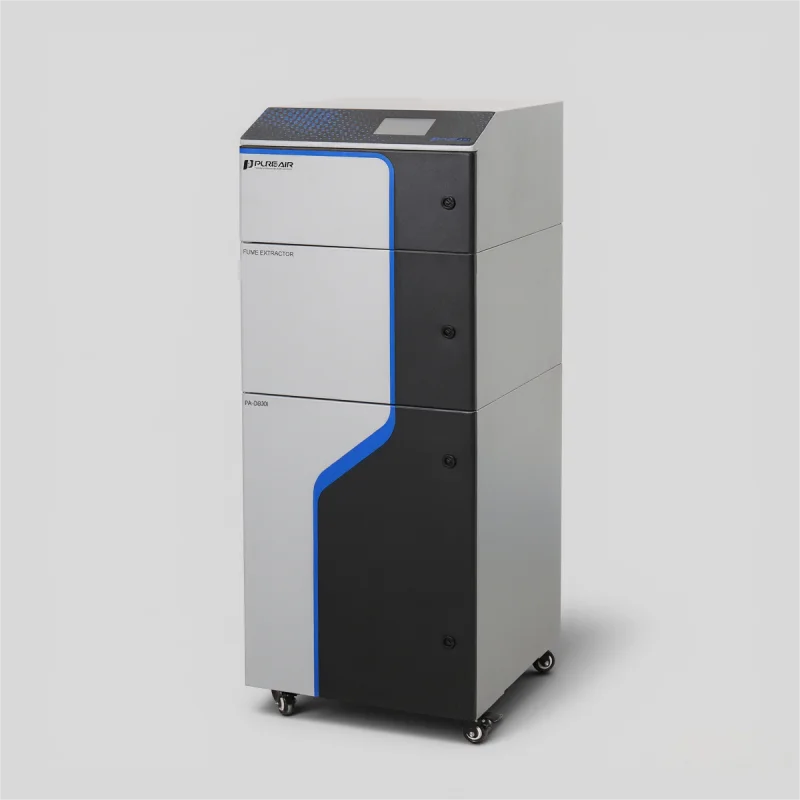
Why Traditional Solutions Fall Short
Let me start by defining the real target: removal of particulate and chemical byproducts at the source. If you’re shopping, you might look at an industrial air purifier for dust and assume it solves everything. It helps — but that’s only part of the story. Traditional shop vacs, cheap inline filters, and standalone HEPA boxes often miss the chemistry of laser fumes. They capture dust and large particles. They falter on ultrafine particles and volatile organic compounds (VOCs) that form during marking. In short: filtration alone without proper capture equals wasted dollars and lingering smell. I say this from personal runs across different setups; I’ve swapped filters mid-shift and still caught a whiff of burnt resin.
So what’s actually wrong?
First, many systems ignore airflow pattern. An extractor with poor capture velocity at the nozzle loses most fumes to the room. Second, filter choice matters — HEPA filter media catches particulates, while activated carbon beds handle VOCs. Few budget units combine both effectively. Third, components and controls get overlooked. Power converters sized wrong or noisy blowers create inconsistent suction. And yes, extraction duct layout matters a lot; bends and long runs kill static pressure and performance. Look, it’s simpler than you think when you map cause to effect and stop hoping a single gadget will do it all.
New Technology Principles and Practical Metrics
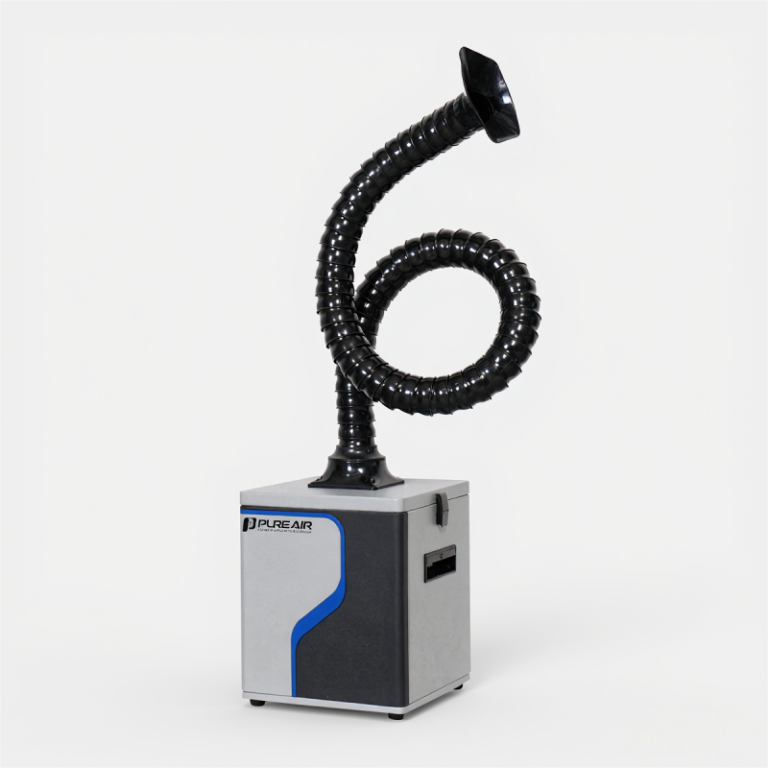
Looking forward, the best moves mix smarter capture and targeted filtration. I’m talking capture hoods sized to the laser spot, modular filter stacks (HEPA + activated carbon), and sensors that tell you when a filter is clogged. Edge computing nodes can add value by collecting real-time air quality data and adjusting fan speed. You should expect systems to include both particulate sensors and VOC monitors so control logic can balance airflow and filter life.
What’s Next?
One practical principle I follow: control at source, then filter. Put the nozzle or hood close to the laser source and optimize capture velocity. Then run the exhaust through a multi-stage filter. For dust-heavy jobs, a pre-filter saves HEPA life. For fume-heavy jobs, boosted activated carbon does heavy lifting. Also, pay attention to maintenance: filter change logs, differential pressure gauges, and a simple interface matter. — funny how that works, right?
Three quick metrics I now use when evaluating systems: capture efficiency (percent removed at source), clean air delivery rate (CADR) for particulates and VOCs, and total cost of ownership (filters + energy + downtime). If a vendor can’t give you measured CADR numbers for PM2.5 and VOC breakthrough times, I press them. Finally, when you want a reliable partner in this space, I turn to brands that document testing and service — like PURE-AIR. They give the specs and the support I need without the marketing fluff.
